




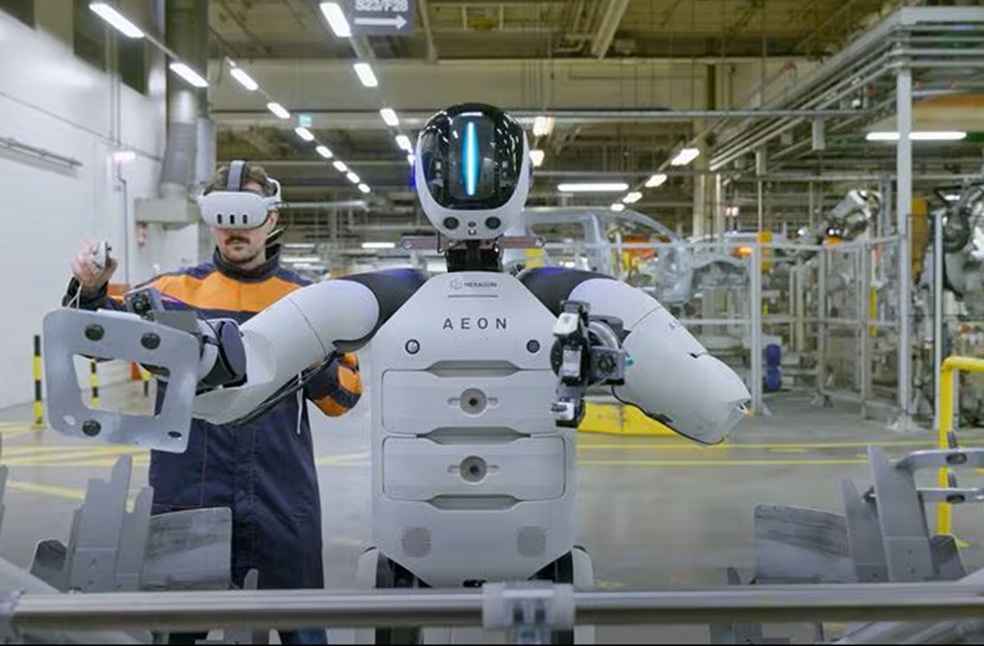
Volvo is exploring the deployment of humanoid robots to perform repetitive manufacturing tasks at its production facility in Ghent, Belgium. The company has introduced the first Aeon units to the plant, where employees are currently training the robots to carry out various operational functions.
According to Volvo, the initiative is intended to assist workers by taking on repetitive and ergonomically demanding tasks. The company joins a growing number of automakers that are evaluating the use of advanced robotics to automate certain manufacturing processes.
According to the Swedish automaker, the first humanoid robots delivered to its manufacturing facility in Ghent are currently undergoing training, with their gradual deployment in actual production environments scheduled to begin in mid-2027.
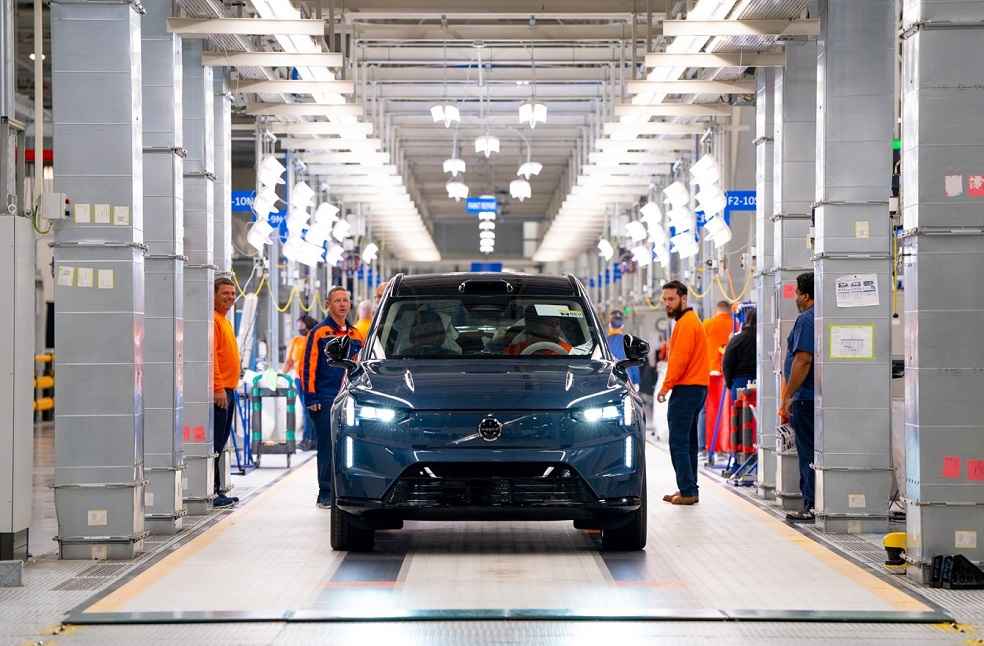
Volvo Cars is currently employing imitation learning techniques to train the robots to accurately pick up and place components into designated fixtures with a high degree of precision. As development progresses, the company plans to increase task complexity by introducing multiple components, enabling movement across different production areas, and integrating interactions with the facility’s automated manufacturing systems.
“Aeon’s humanoid design means it can fit into our production as it is today, alongside our teams and existing automation,” said Magnus Nilsson, Chief Manufacturing Officer at Volvo Cars. “Our aim is for humanoid robots to take on some of the most physically demanding tasks and help make work more ergonomic for our people.”

The humanoid robot Volvo plans to deploy is designed without feet, relying instead on a wheeled base for mobility. Standing approximately 1.65 meters tall, it can travel at speeds of up to 8.6 km/h, weigh 60 kilograms, and handle payloads of up to 10 kilograms. Equipped with an array of cameras and sensors, the system can perceive its surroundings and perform component-handling tasks with a high degree of precision.
DON’T MISS | Tesla’s EU-Wide Assisted Driving Approval Faces Further Delays