





Mercedes-Benz has become the first German automaker to secure regulatory approval for its point-to-point driving assistance system, MB.Drive Assist Pro, from the German Federal Motor Transport Authority (KBA). The approval allows the system to offer SAE Level 2 automated driving from one destination to another, even in complex urban environments.
The system can perform lane changes, select the appropriate lanes, navigate intersections, respond to traffic lights, and manage highway entry and exit maneuvers when navigation is active. It relies on 27 sensors, comprising ten cameras, five radar sensors, and twelve ultrasonic sensors, supported by a high-performance computer capable of processing up to 254 TOPS. Another notable feature is that drivers can make manual steering corrections while the system is engaged without deactivating it.
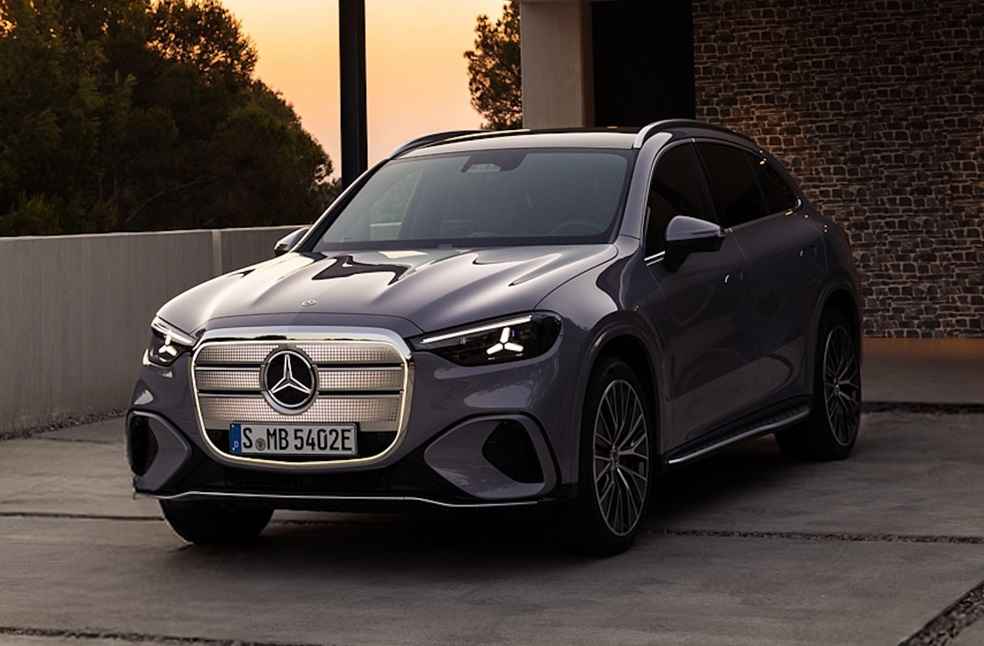
Despite its advanced features, MB.Drive Assist Pro is still an SAE Level 2 driver assistance system, not a fully autonomous driving system. The driver is always responsible for the vehicle and must keep an eye on the road, even though they can take their hands off the steering wheel. They must also be ready to take control whenever needed. In simple terms, it’s a ‘hands-off, eyes-on’ system.
Unlike Mercedes-Benz’s previously introduced Drive Pilot system, MB.Drive Assist Pro does not offer Level 3 automated driving, which allows drivers to temporarily hand over control under specific conditions and divert their attention from the road (“hands-off, eyes-off”). However, Drive Pilot is subject to considerable restrictions, including limited operation on highways at controlled speeds. In contrast, MB.Drive Assist Pro is designed for everyday driving and can operate in a wider range of environments, including urban areas and rural roads.

MB.Drive Assist Pro’s door-to-door driving capability is based on UN Regulation R171 for Driver Control Assistance Systems (DCAS), which is expected to take effect in January 2027 and provide a harmonized legal framework for deployment in additional markets. As previously announced, Mercedes-Benz plans to launch an early-access program in Stuttgart and Munich in December 2026, ahead of a broader rollout in Germany during the first half of 2027.
Vehicles equipped with the necessary hardware may gain access to the new features through an over-the-air software update. While Mercedes has not yet confirmed which models will support the system at launch, the all-electric CLA is considered a likely candidate, having already been used to demonstrate the technology in the U.S. earlier this year.
GENERAL | Waymo Files Safety Recalls Over Freeway and Traffic Navigation Issues