





General Motors started installing roughly 50 new robots at its Factory Zero plant in Detroit, marking a significant step toward increased automation at the facility. The collaborative robots, or ‘cobots,’ have been integrated into the assembly line to assist with tasks such as attaching body panels to vehicles as they move through production, working directly alongside the remaining workforce.
The deployment of cobots follows a series of workforce reductions, with GM cutting more than 1,000 jobs at the site, and comes amid a broader softening of its electric vehicle commitments. Production at Factory Zero has been paused multiple times, underscoring the challenges the automaker faces in scaling its EV operations.

According to UAW Local 22 president James Cotton, the Fanuc-manufactured machines operate alongside workers on the production line, assisting with vehicle assembly tasks. Cotton said the automation is displacing jobs held by union members and noted that workers have expressed concern over their increasing presence at the facility.
The development reflects a broader industry trend, as automakers increasingly adopt automation and artificial intelligence to reduce labor costs while maintaining production within domestic plants.
Cotton also said the union has filed grievances against General Motors over the deployment of the robots and raised concerns regarding machines operating in close proximity to workers.
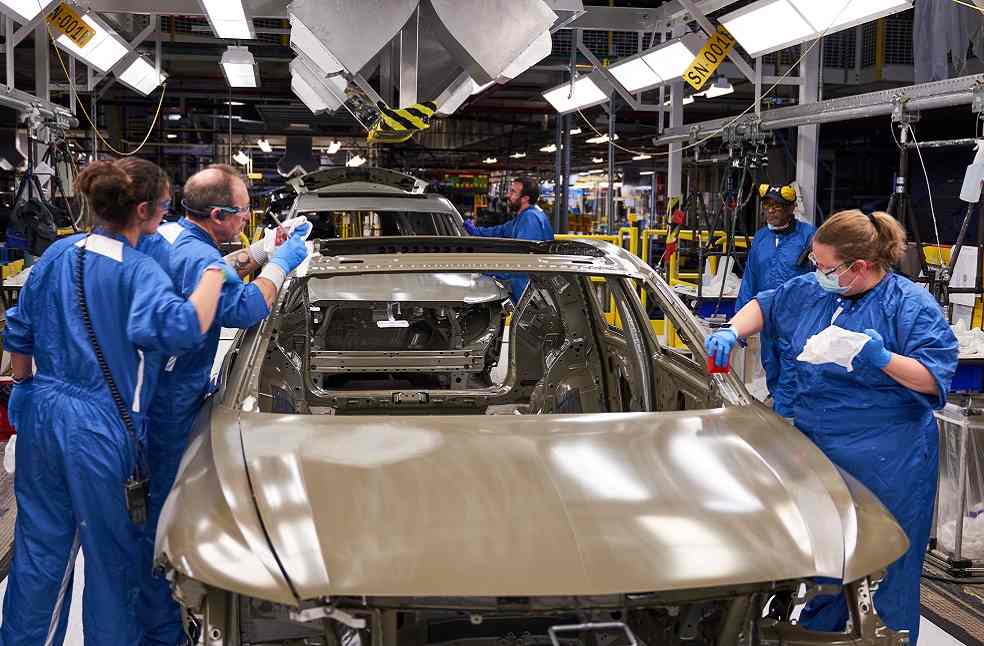
GM spokesperson Kevin Kelly stated that the robots are being introduced as part of the company’s efforts to integrate more advanced technologies into its operations. He added that the systems are intended to enhance safety and ergonomics while maintaining ‘operational flexibility and competitiveness.’ The company confirmed that dozens of units have recently been installed at the plant as part of its broader automation strategy.
Factory Zero, formerly the Detroit‑Hamtramck site, was restructured several years ago to focus exclusively on electric vehicles. However, with demand for EVs slowing in the United States, GM has reduced shifts, laid off workers, and paused production multiple times. The issue is expected to play a significant role in the UAW’s 2028 contract negotiations, highlighting tensions between labor concerns and GM’s automation strategy.
AUTO TECH | Sweden Opposes EU Approval of Tesla FSD Over Speed Limit Concerns