





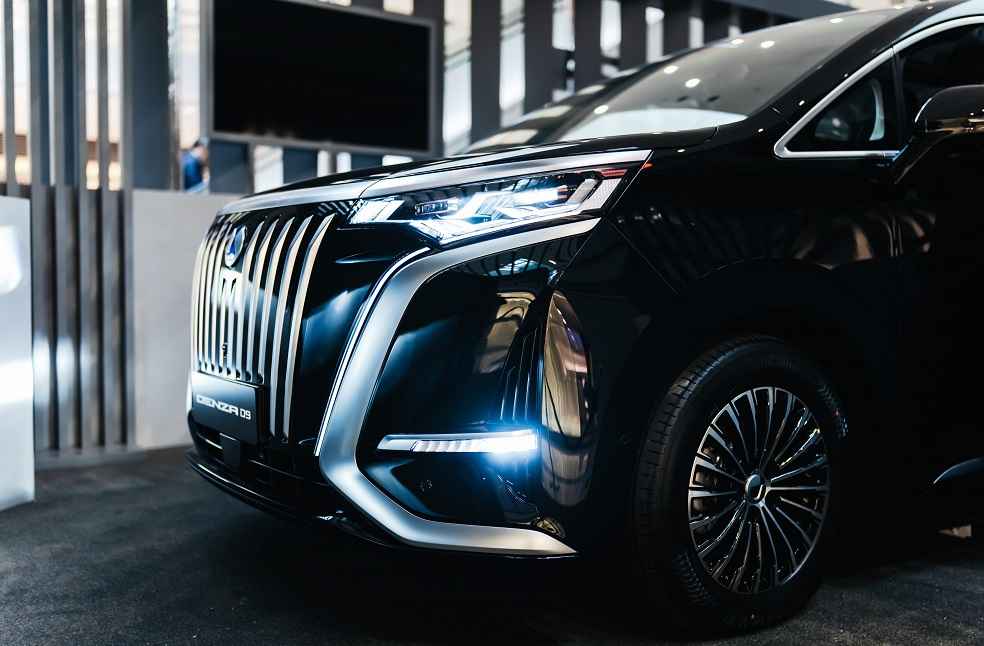
BYD is preparing to introduce its in-house developed Xuanji A3 smart driving chip in a new production model under its Denza brand in 2027, according to a report by LatePost.
The Xuanji A3, unveiled in May, is China’s first smart driving chip manufactured using a 4nm process. The move highlights BYD’s deeper push into vertical integration within the intelligent driving sector, though the company has not yet revealed when large-scale production will begin.
According to a BYD representative, the validation process for an automotive chip is extensive, requiring separate verification of the chip itself, the deployment of its algorithms, and its integration into the vehicle. As a result, the timeline for bringing a new chip into production vehicles is difficult to shorten.
According to BYD, a single Xuanji A3 chip delivers more than 700 TOPS (trillion operations per second) of computing power. A three-chip configuration provides a combined computing capacity exceeding 2,100 TOPS, enabling support for Level 3 (L3) and Level 4 (L4) autonomous driving. The company also stated that the Xuanji A3 offers a 20% improvement in power efficiency per unit of computing performance compared with competing products.
In addition, optimization using BYD’s in-house developed algorithms has doubled the chip’s computing power utilization.
BYD has built its semiconductor capabilities over twenty years, with its integrated circuit design unit in 2002, which later evolved into BYD Semiconductor. The acquisition of Ningbo Zhongwei Semiconductor in 2008 marked its entry into the IGBT sector. Since then, the company has advanced toward self-sufficiency in areas such as power semiconductors, MCUs, and power management.
BYD’s chip R&D team now exceeds 7,000 members, supported by four research bases and five wafer fabs, with cumulative investment surpassing 100 billion yuan ($14.71 billion).

Despite this scale, achieving vertical integration in intelligent technologies remains significantly more challenging than in electrification.
Power semiconductors mainly support electric drive, control, and energy conversion, while ADAS chips focus on driver-assist functions that evolve with algorithms, sensors, domain controllers, and vehicle architecture. To manage this complexity, BYD shifted its driving chip business to its new technology institute, which in early 2024 merged two smart driving teams. The institute now also oversees smart driving software, cockpit systems, domain control hardware, and foundational software.
In addition to developing its own technologies, BYD continues to rely on external partners such as Momenta and Huawei for its God’s Eye smart driving system. When the system was introduced in February last year, BYD already had more than 5,000 engineers dedicated to smart driving.
EV WORLD | Geely’s Lotus Brand to Enter Canadian Market Next Month