





The new BMW X5 has entered the final stage of its testing ahead of its production launch. BMW has confirmed that the lineup will introduce the all-electric BMW iX5 and become the brand’s first production vehicle to be available with five different powertrain options.
According to BMW, the vehicle is currently undergoing final calibration and validation testing near the BMW Spartanburg Plant in the U.S., where it will be produced. The test fleet includes the conventionally powered X5 40 xDrive, the plug-in hybrid X5 50e xDrive, and the fully electric BMW iX5 60 xDrive, which features the largest high-voltage battery ever installed in a fully electric BMW model.
The all-electric iX5 represents the most significant addition to the new X5 lineup and is the first model in the range to utilize the brand’s sixth-generation eDrive technology. The advanced powertrain combines a next-generation high-voltage battery featuring cylindrical cells and 800-volt architecture with dual electric motors—one on each axle—working in conjunction with BMW’s xDrive all-wheel-drive system.
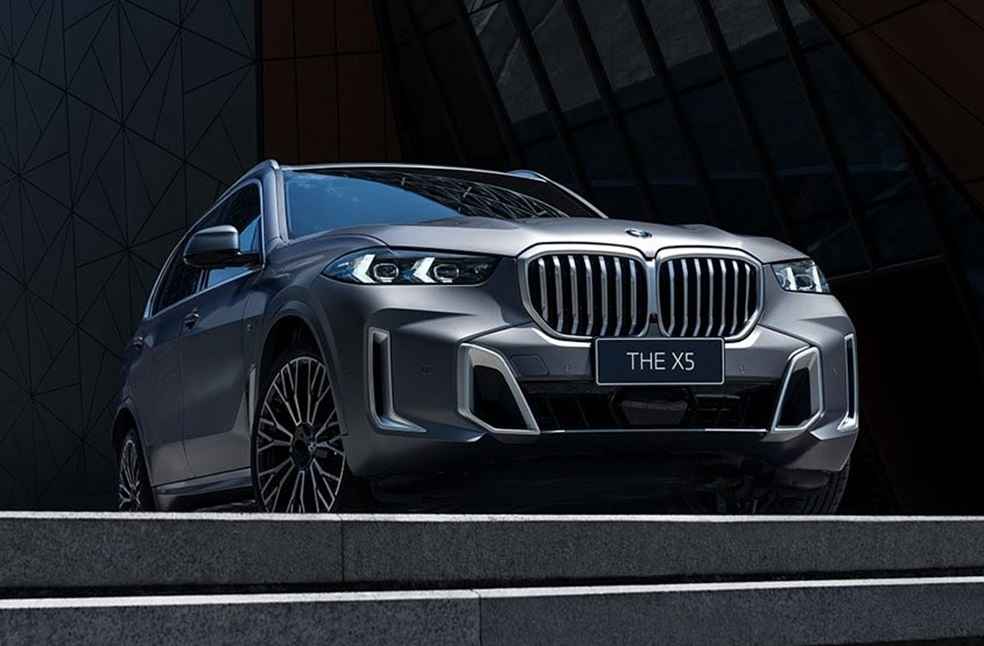
BMW states that the iX5 60 xDrive offers a usable battery capacity of 144 kWh in the U.S. market and 141 kWh in Europe (net), making it the largest high-voltage battery ever installed in a fully electric BMW production vehicle.
In addition to the battery-electric iX5, the lineup will include plug-in hybrid, gasoline, and diesel variants equipped with 48‑volt mild hybrid systems and—slated for introduction in 2028—BMW’s first series‑produced hydrogen model.
The automaker is set to launch its first series-produced hydrogen-powered model, the BMW iX5 Hydrogen, in 2028. The vehicle will combine a third-generation fuel-cell system, a high-voltage battery, and BMW’s Hydrogen Flat Storage technology, allowing it to be manufactured alongside other X5 variants on the same production line.
The X5 also adopts the Heart of Joy central control unit from BMW’s Neue Klasse, operating the in‑house Dynamic Performance Control stack. BMW states this unit responds ten times faster than previous systems, coordinating powertrain, braking, steering, charging, and energy recuperation within milliseconds. In the iX5 and iX5 Hydrogen, it enhances regenerative braking for smoother deceleration and improved energy recovery.

Meanwhile, combustion and plug‑in hybrid versions employ advanced traction and dynamics technologies, including a tenth‑generation transverse dynamics management system and near‑actuator wheel slip limitation.
Additionally, the X5 integrates SAE Level 2 driver assistance and active safety features derived from Neue Klasse technology, supported by BMW Symbiotic Drive. An optional Motorway and City Assistant provides highway entry‑to‑exit and urban address‑to‑address guidance.
BMW emphasizes that its Level 2 systems are designed to keep drivers engaged: acceleration, steering, and braking remain under driver control while assistance is active. Safety features include intelligent lane-keeping assistance, automated evasive steering, lane-change and side-collision warnings, and crossing-traffic alert with automatic braking.
DON’T MISS | UK Plans to Revise 2030 Electric Vehicle Sales Targets