





Nissan Motor has announced plans to significantly reduce its vehicle development timelines by nearly 50%, adopting practices used by Chinese automakers. The company is targeting a cycle of approximately 30 months for new models.
President Ivan Espinosa told Nikkei Asia that the upcoming next-generation Skyline, scheduled to debut this winter, is the first model developed under this streamlined approach. Its development period has been shortened to 26 months, compared with 55 months for the outgoing version.
Nissan intends to implement the revised development process across 90% of its vehicle programs by fiscal year 2026. The company explained that accelerating development cycles will enable it to respond more effectively to evolving consumer preferences and regulatory demands.
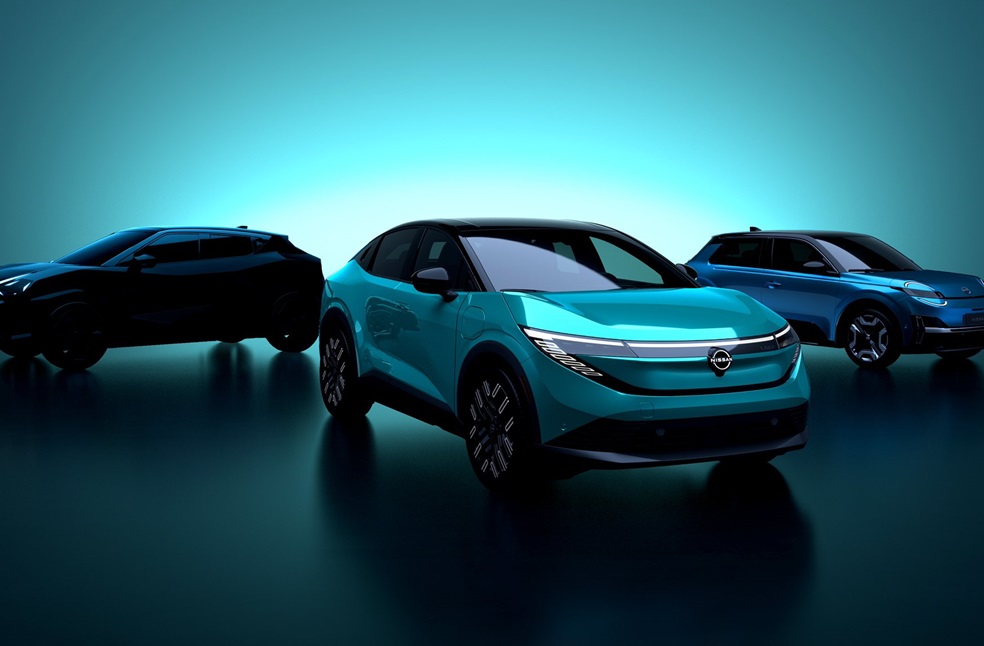
The initiative is in line with expertise gained through Nissan’s joint venture with Dongfeng Motor in China, reflecting the automaker’s effort to integrate proven practices from its Chinese operations into its global production framework.
Nissan also plans to standardize chassis platforms and core components across multiple models to improve efficiency and reduce development costs. Espinosa stated that the company’s first large-vehicle family developed under this strategy will be produced at its Canton, Mississippi facility.
The lineup is expected to include five SUVs and pickup trucks, including models under the Infiniti brand, as well as one vehicle to be supplied to Mitsubishi Motors through an OEM agreement. Nissan projects that three core vehicle families, including a compact lineup developed in Japan, will account for approximately 80% of its global sales. Launches are expected to begin in fiscal 2028.
Meanwhile, the automaker’s worldwide sales fell by 6% year‑on‑year in fiscal 2025, totaling 3.15 million units. In Japan, sales declined by 13% to approximately 400,000 units, marking the lowest January‑to‑May figure since 1993.

To strengthen its domestic position, Nissan aims to increase annual sales in Japan to 550,000 units by fiscal 2030. This goal will be supported by the introduction of seven new models over roughly a year, beginning with the redesigned Leaf, which launched in January, and the reintroduced Skyline. Additionally, Nissan is considering a new model positioned between the Note and the Serena.
Additionally, Nissan has indicated it may shift production of certain existing models to its Tochigi plant in Japan in order to improve factory utilization, citing weaker demand for the Leaf and Ariya.
In April, the company announced plans to equip 90% of its vehicle lineup with AI-powered autonomous driving technology through its partnership with Wayve. Espinosa also confirmed that discussions with Honda Motor regarding potential collaboration are ongoing, with a possible announcement on North American production cooperation expected soon.
GENERAL | Ford Rules out R-Rated Ranger and Bronco Raptors