



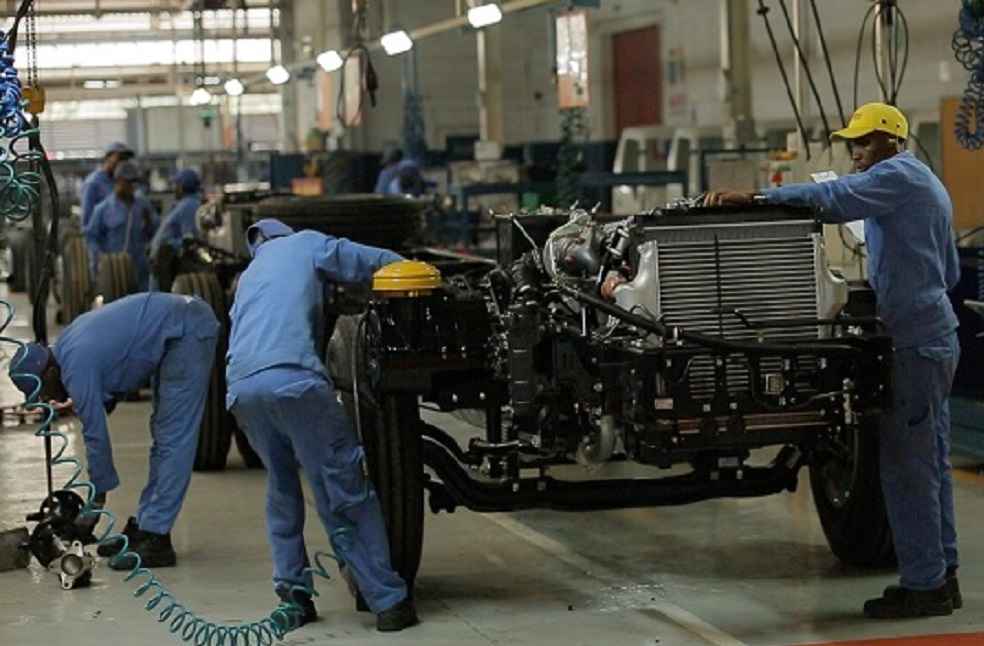
Morocco has overtaken South Africa as Africa’s largest car manufacturer after producing one million vehicles by early December 2025, marking a sharp rise from the 559,645 units recorded for the whole of 2024.
The achievement ends South Africa’s long-held dominance of car production on the continent and highlights shifting dynamics in African manufacturing.
South Africa’s automotive sector recorded growth in 2025, but not at a pace sufficient to retain the top position. Data from the National Association of Automobile Manufacturers of South Africa (Naamsa) shows total vehicle sales of 596,818 units from January to December, up 15.67% from 515,976 in 2024.
Domestic sales accounted for 408,224 units, with the remainder exported. Despite the increase, South Africa’s overall production volume remained below Morocco’s annual output.
Morocco’s rise reflects the sustained expansion of its automotive industry over the past 15 years. The country did not export vehicles in 2010 but has since become a major manufacturing and export hub, driven by strong government backing and policies aimed at attracting private investment.

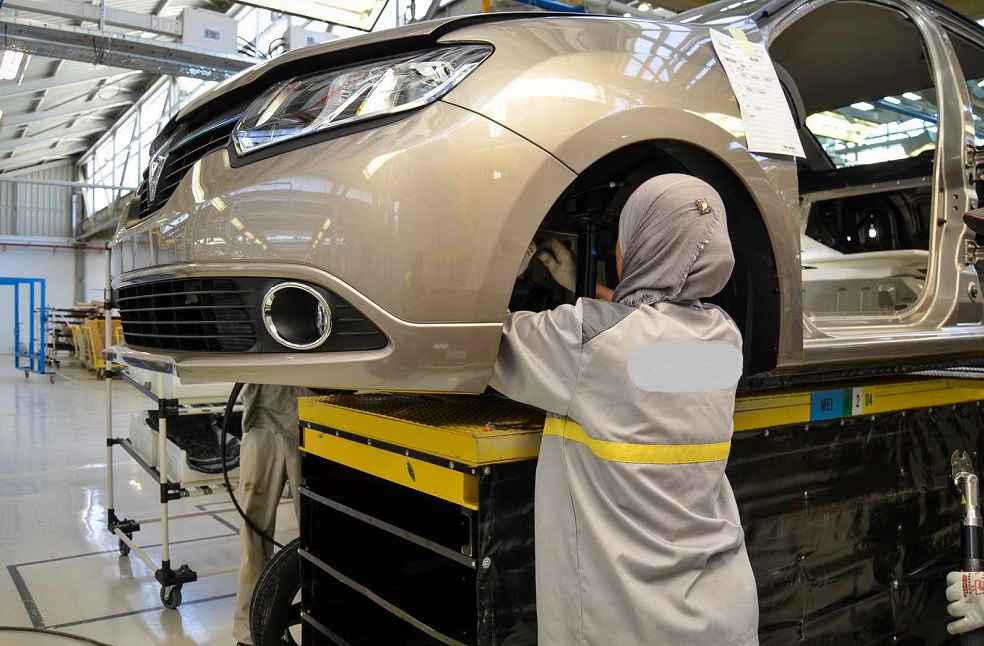
Tax incentives and free trade agreements with key markets, including the European Union, the United States, and China, helped draw major automakers such as Renault, which opened a plant in 2012, and Stellantis, which began production in 2019. These investments significantly expanded Morocco’s production capacity and export footprint.
The country has also moved early into electric vehicle manufacturing. Morocco started producing Opel’s Rocks-e electric model in 2021, while South Africa has yet to begin local production of a fully electric vehicle.
Moroccan carmaker Neo Motors is expected to start production of the Dial-E, the country’s first fully locally designed electric vehicle, in January 2026. In addition, Tesla has selected Morocco as its first African market with an official presence, reinforcing the country’s position in the EV segment.
South Africa’s automotive industry, meanwhile, has faced mounting geopolitical and trade uncertainties alongside domestic structural challenges. Diplomatic tensions with the United States and parts of Europe have raised concerns about long-term market access, trade preferences, and investor confidence.
These concerns are significant because the U.S. and EU remain key destinations for South African vehicle exports, including higher-end models sold through long-established distribution networks. While no formal trade restrictions have been imposed, the strained relations have added to pressures on manufacturers.
Energy supply has also become a decisive factor. Morocco has invested heavily in renewable energy, improving access to more stable and increasingly cost-competitive electricity. Although fossil fuels still generate about 70% of Morocco’s power, that share is gradually declining.
South Africa’s state utility Eskom produces roughly 80 to 85% of electricity from fossil fuels, and repeated episodes of load-shedding have disrupted industrial output and raised costs as companies rely on backup power.
Policy and market conditions have further slowed South Africa’s transition to new-energy vehicles. A 150% tax rebate for firms upgrading plants for electric vehicle production is set to begin only in March 2026. On the consumer side, fully electric vehicles remain costly, and concerns over electricity reliability have dampened demand. Hybrid vehicle sales have increased, but still represent less than 5% of total vehicle sales.
DON’T MISS | Stellantis to Phase Out Plug-in Hybrid Models in North America