





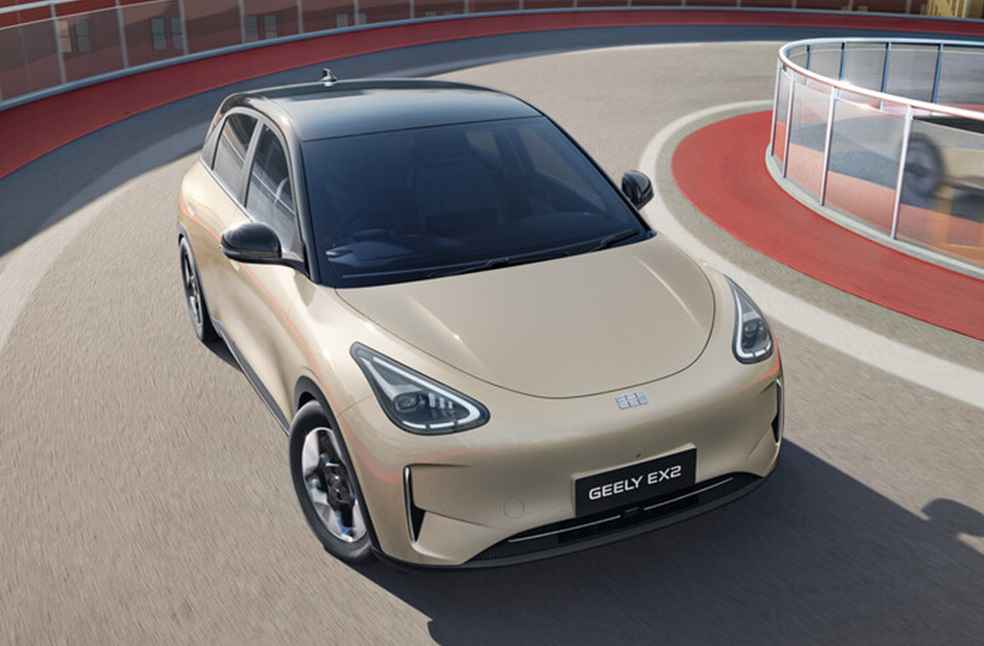
Geely Auto has begun mass production of its best-selling compact electric hatchback, the Geely EX2, marketed in China as the Geely Xingyuan, in Brazil.
The production is being carried out by Renault Geely do Brasil, the joint venture between Renault and Geely, at the Ayrton Senna Complex facility in Paraná state, according to a company statement released on Wednesday. Built on Geely’s Global Intelligent New Energy Architecture (GEA) platform, the EX2 is the second model to enter local production through the joint venture, following the Geely EX5 EM-i hybrid SUV.
The Geely EX2 was introduced to the Brazilian market in November 2025. Positioned as an affordable urban mobility solution, demand for the model has steadily increased since its debut, leading Geely to integrate local production into its long-term strategy.
Chen Jianjun, head of Renault Geely do Brasil, highlighted that the strong performance of the EX2 underscores Geely’s capabilities in product development and market positioning. He added that as demand continues to rise and more competition intensifies, Renault Geely do Brasil will further accelerate its localization efforts.
The EX2 is marketed in China as the Geely Xingyuan and is among the country’s top-selling compact electric vehicles. It recorded retail sales of 465,775 units in 2025 in China, according to data from CnEVPost. The model also ranked first in China’s passenger vehicle retail sales in May with 38,751 units, surpassing the Tesla Model Y.

Geely rolled out an updated version of the Xingyuan in China in May, with a limited-time starting price of 61,800 yuan ($9,120)—about 6% lower than the previous model—to reinforce its foothold in the entry-level segment. Alongside the local EX2 production, Geely Auto’s Brazilian unit is also advancing a brand-building initiative.
Geely Auto’s localization strategy in Brazil reflects a broader trend of Chinese automakers rapidly expanding overseas, with international markets increasingly serving as a key driver of growth for China’s automotive sector.
DON’T MISS | BYD Pushes Hungary Production Start to Late 2026