





Former Stellantis CEO Carlos Tavares has issued a stark warning about the direction of the EU auto sector, arguing that recent policy decisions by the European Union have created conditions that could significantly weaken the industry.
Speaking at a conference in Santa Maria da Feira, Tavares said the EU’s approach over the past several years has “moved in the wrong direction” and now risks triggering structural damage with long-term social and industrial consequences.
Tavares believes Chinese automakers could capture as much as 10% of the European market within the next five years. With around 15 million vehicles sold annually in the EU, he said this would amount to more than 1.5 million cars produced by Chinese brands, the equivalent of the output of up to ten European factories.
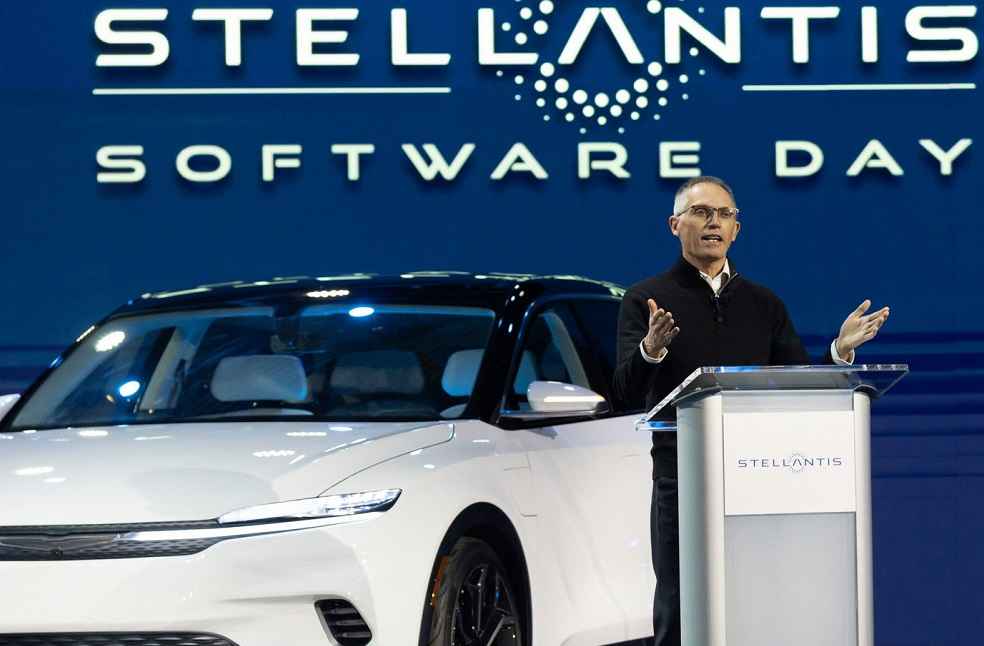
“When protests break out, governments will invite the Chinese to buy the plants for a symbolic value,” he said. He added that such outcomes would push governments into accepting Chinese investment under the pressure of job losses and community unrest.
According to Tavares, Europe’s core policy mistake was not the pursuit of environmental targets but the decision to mandate a single technological pathway. Rather than allowing multiple competing technologies to meet emissions goals, he said, policymakers imposed a rigid framework centered around battery-electric vehicles.
This lack of technological neutrality, in his view, created an uneven playing field that favored Chinese manufacturers, who have spent more than two decades developing electric vehicles and were therefore prepared to dominate just as Europe entered a turbulent transition period.

He warned that the impact would not be limited to industry metrics. The closure of factories would have direct consequences for workers and local communities, fuelling protests and social instability.
In such an environment, he argued, foreign takeovers would appear to be the only option to preserve employment, even at the cost of giving up strategic industrial assets.
Tavares, who was recently succeeded by Antonio Filosa at Stellantis, described a future in which Europe may pay a steep price for its current energy transition policies.
He cautioned that these choices could shift the balance of power across the global automotive landscape in the coming years, leaving Europe in a weakened competitive position.
GENERAL | EUROFER Slightly Raises 2025 Outlook but Auto Sector Still Under Strain