




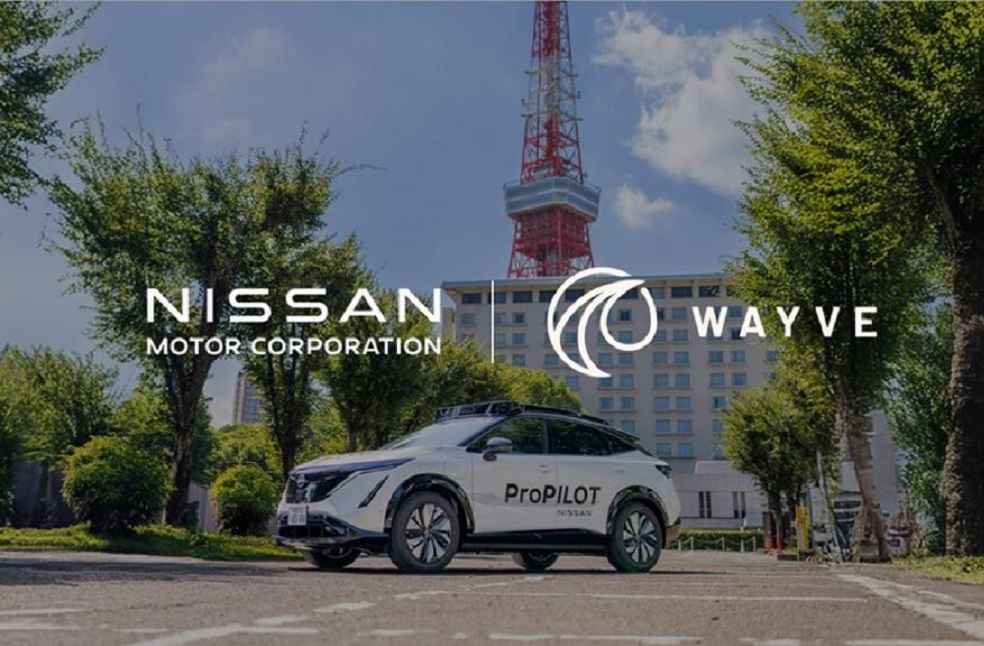
Nissan has signed definitive agreements with British autonomous driving startup Wayve to integrate its proprietary ’embodied AI’ technology into the next generation of Nissan’s ProPILOT advanced driver assistance systems.
The deal makes Nissan the first automaker to commit to deploying Wayve’s self-learning AI platform at scale, with an initial rollout planned for Japan in fiscal year 2027 across a wide range of vehicle segments.
Under the partnership, Wayve’s AI Driver software will be combined with Nissan’s Ground Truth Perception sensor suite, which features next-generation LiDAR. The integration aims to enable assistance for both highway and complex urban driving scenarios.
Nissan’s Chief Executive Ivan Espinosa said the collaboration sets “a new benchmark for driver assistance,” adding that it is a key step in the company’s mission to deliver cleaner, safer, and more inclusive mobility.
Wayve Co-Founder Alex Kendall said Nissan’s commitment represents an important milestone in bringing embodied AI to mass production. He noted that pairing Wayve’s fast-advancing software with Nissan’s global scale could accelerate the path toward safer and more intuitive autonomous mobility.
The agreement builds on an initial partnership announced in April 2025, when Nissan became Wayve’s first global manufacturing partner.
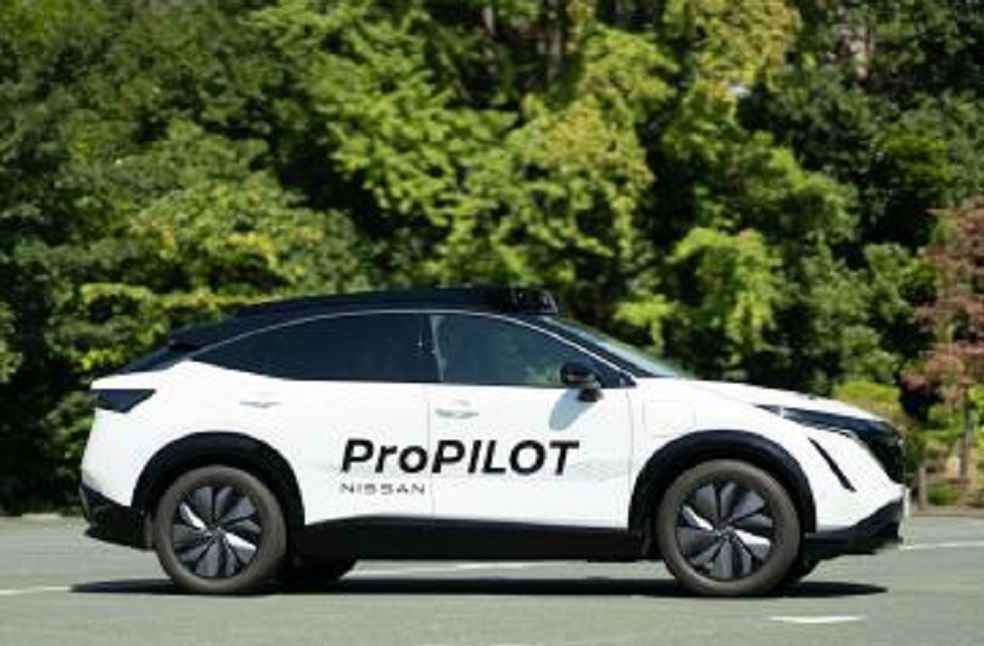
Nissan later unveiled a prototype in September, demonstrating Wayve’s AI Driver working with ProPILOT in both urban and highway settings. The demonstration followed eight years of SAE Level 2 testing completed in the UK in early 2025.
Nissan introduced the original ProPILOT system in 2016 for single-lane highway assistance and expanded it in 2019 with ProPILOT 2.0, enabling multi-lane operation and hands-off capability under certain conditions. The integration of Wayve’s AI represents the next major evolution in the series.
Wayve rose to global prominence in 2024 with its GAIA-1 model, an AI system that generates synthetic training data from real-world driving scenarios.
The company’s end-to-end approach allows its software to adapt quickly to new cities and vehicle platforms with minimal redevelopment, significantly reducing costs relative to traditional autonomous driving systems.
For Wayve, deployment into mass-produced vehicles marks a major technical and commercial milestone. For Nissan, the partnership arrives at a critical time. The automaker has been undergoing sweeping restructuring efforts throughout 2025 as it addresses historic financial losses.
Nissan views smart driving technologies as a strategic differentiator in a highly competitive sector. Earlier this year, the company conducted autonomous vehicle trials in Japan, though the systems tested remained SAE Level 2.
The companies say the large-scale rollout of the AI-powered ProPILOT system will generate valuable real-world data and accelerate continuous improvement, strengthening both Nissan’s technological positioning and Wayve’s global ambitions.
TOP CARS | Alef Begins Producing World’s First Electric Flying Car for Early Customers