



Kia celebrated its 80th anniversary on Friday with a ceremony in Yongin, Gyeonggi Province, reflecting on its evolution from a small bicycle-part manufacturer founded in 1944 to one of the world’s top three automakers alongside Hyundai Motor.
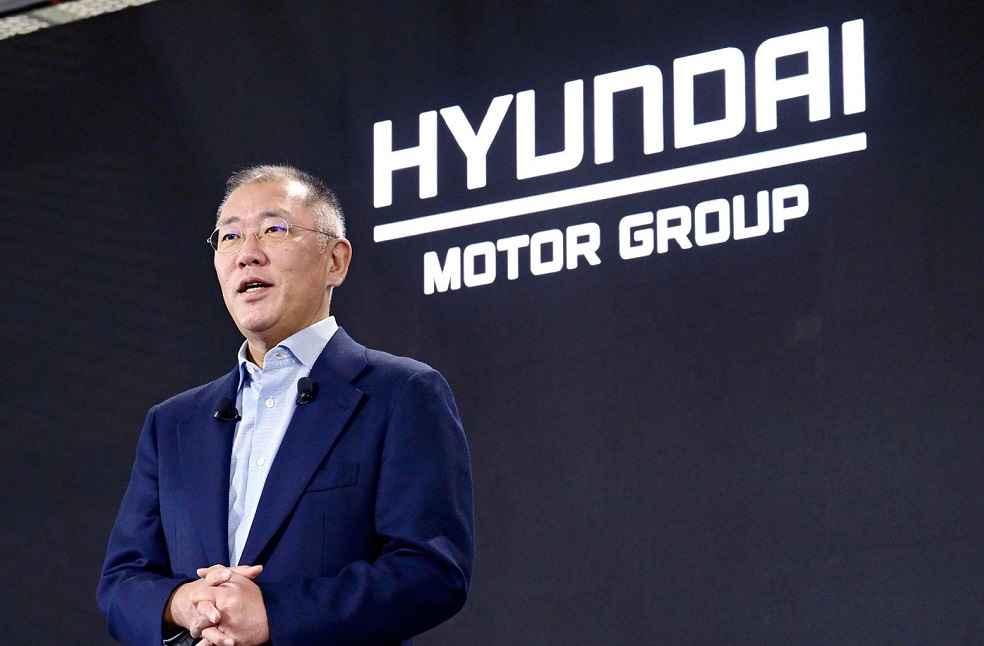
The event was attended by Hyundai Motor Group Executive Chair Chung Euisun, Kia CEO Song Ho-sung, and design chief Karim Habib.
Founded by Kim Cheol-ho, Kia has survived two bankruptcies, including the 1997 Asian financial crisis that forced it into court receivership.
Hyundai’s 1998 acquisition stabilized the company and laid the foundation for a rapid turnaround that propelled Kia toward global competitiveness.
In his remarks, Chung described Kia’s journey as “a unique and invaluable chapter in the history of Korean industry,” crediting founder Kim for pioneering Korea’s mobility era, from early bicycles and motorcycles to the nation’s first passenger car and its first integrated automobile plant.

Chung also highlighted the broader mobility ecosystem created by Hyundai founder Chung Ju-yung, who helped build the infrastructure that supported Korea’s industrial expansion.
He noted that honorary Chair Chung Mong-koo’s “quality-first management” philosophy shaped the long-term vision that ultimately lifted Hyundai and Kia into the ranks of the world’s largest automakers.
CEO Song Ho-sung said Chung Euisun has transformed Kia through design-led leadership and a future-oriented strategy centered on eco-friendly mobility.
Song, who himself led Kia’s return to profitability in 2005 through design-focused management, said the company’s sweeping 2021 rebrand marked a decisive shift in identity and ambition.
Under Chung’s direction, Kia has expanded its electric vehicle lineup beyond the EV6 and EV9 to include mass-market models such as the EV3, EV4, and EV5.
The company also launched its first purpose-built vehicle this year, the PV5, which will be manufactured at Kia’s Hwaseong plant with an initial capacity of 100,000 units, rising to 250,000.
Kia’s global expansion was another theme of the anniversary event. Chung played a key role in establishing the company’s standalone overseas manufacturing footprint, beginning with a plant in Zilina, Slovakia, in 2004.
He later oversaw the opening of a U.S. plant in Georgia in 2006, which produced the K5 sedan and strengthened Kia’s position in the American market.
The company also released 80 Years of Kia, its first historical volume since joining Hyundai Motor Group. Adviser Lee Chang-kyu said the publication reflects Kia’s unusual commitment to recording its past with honesty, including achievements and failures.
Kia’s revival, Lee noted, is rare in the global auto industry, where few companies have rebounded from bankruptcy to become leading brands. Automotive engineering professor Kwon Yong-ju called the Hyundai–Kia integration one of the industry’s “most symbolic turning points.”
Kia also unveiled its Vision Meta Turismo concept, a next-generation mobility design blending high performance with a spacious, multi-purpose interior aimed at delivering immersive travel experiences.
Chung concluded the event with comments on autonomous driving, acknowledging that Hyundai Motor Group remains behind competitors such as Tesla and Chinese automakers.
He said the company’s U.S. self-driving joint venture Motional is making strong progress but stressed that “closing that gap is less important than ensuring safety, which will remain our top priority.”
EV WORLD | Honda Offers New Incentives for e:Ny1 Electric SUV in the UK