





China has emerged as the strongest performer in the worldwide shift toward electric mobility, outpacing other major markets in vehicle electrification, charging infrastructure, and AI-enabled driving technologies, according to a new report from consultancy Roland Berger.
The 14th edition of the Automotive Disruption Radar, based on 26 performance indicators and feedback from more than 22,000 consumers in 22 countries, shows that the automotive transition is accelerating but progressing unevenly across global regions.
Ron Zheng, senior partner at Roland Berger and head of the firm’s automotive practice in Asia, said China is leading on multiple fronts and is “quickly pulling away from other regions”.
Data from the China Association of Automobile Manufacturers shows the country sold 1.71 million new energy vehicles in October, representing 51.6% of all vehicle sales that month. Pure electric vehicles accounted for 1.1 million units, or 33.1% of total sales.
China’s progress is also reflected in rapid advancements in smart car cabins. Research from J.D. Power and Tongji University noted significant improvements in multimodal interfaces, AI-driven intent recognition, and real-time processing capabilities.
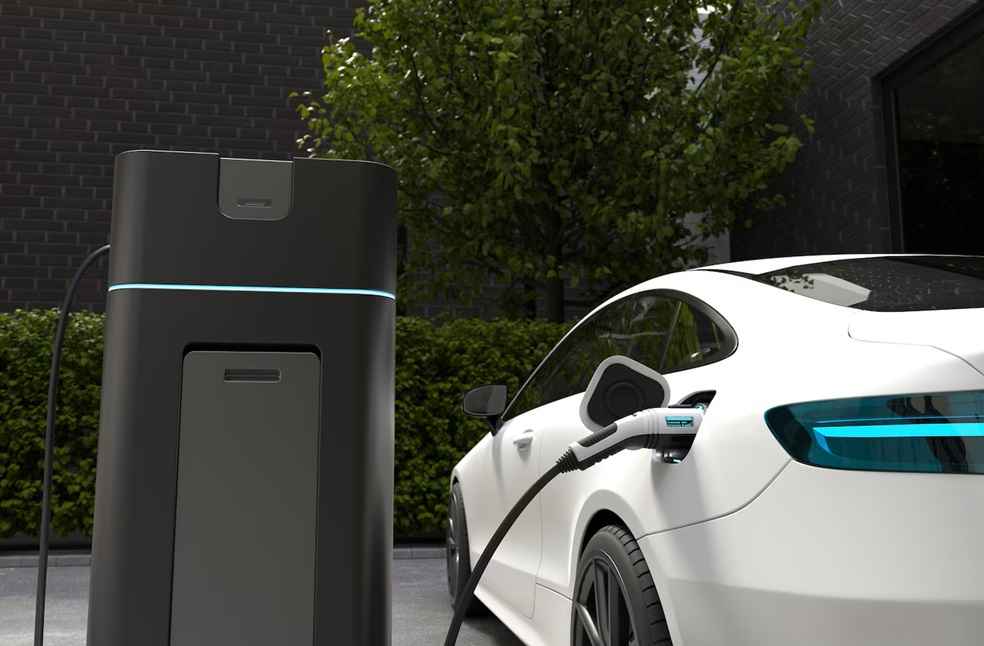
These gains, combined with strong infrastructure development, underscore China’s commanding position in electric mobility and autonomous technologies.
The report highlights a widening gap between China and other regions, especially in software and product development speed. Chinese automakers typically require 24 to 40 months to bring a new model to market, compared with 48 to 60 months in Europe.
Consumer demand is another key driver; 95% of Chinese respondents said they would consider an EV for their next vehicle, a figure supported by extensive charging networks and steady model introductions.
While China’s EV penetration has grown from 22 to 25% over the past year, Europe has remained stalled at 12%. Enthusiasm in Germany, Japan, and the United States also fell, even among current EV owners. Only 35% of EV drivers in the U.S. said they would buy another EV, compared with 45% in Germany and 25% in Japan.
Model availability may be influencing consumer appetite. The report found that Chinese brands BYD and Wuling accounted for eight of the world’s 10 best-selling EV models in 2024, with Tesla’s Model Y and Model 3 completing the list.

Roland Berger said the future competitiveness of automakers will depend on how well they combine strategic partnerships, software capability, and preparedness for diverging market conditions.
The study describes a global auto sector breaking into distinct regional ecosystems shaped by unique regulations, technologies, and consumer behavior.
China’s rapid advances in technology and infrastructure, the report said, are positioning it to push ahead while Europe remains comparatively stagnant. At the same time, Europe’s dependence on Chinese expertise is deepening.
Volkswagen has partnered with XPeng and SAIC to develop electric models tailored to China’s tech-driven market, while BMW and Toyota are leveraging capabilities from Chinese firms, including Momenta and DeepSeek.
The research outlines five emerging automotive ecosystems: the United States, Europe, China, Japan, and South Korea, each taking a different trajectory in the transition to smart EVs.
Roland Berger notes that U.S. automakers are growing increasingly isolated due to protectionist policies, while manufacturers in Japan and South Korea remain domestically oriented but are seeking strategies to maintain their competitiveness in the evolving industry landscape.
KNOWLEDGE | Automakers Protest Small-Car Exemption, Call It Unfair Advantage