




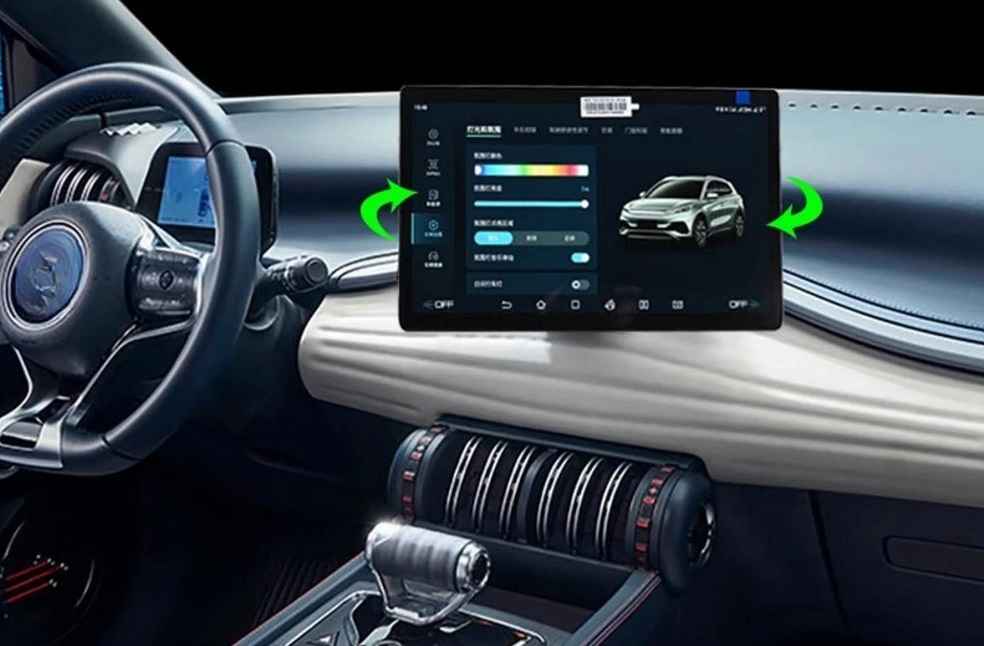
BYD is preparing to discontinue one of its most distinctive design elements, the rotating infotainment screen, as the company shifts focus toward broader compatibility with third-party apps and improved user experience.
The Chinese automaker introduced the electronically rotating display as a headline feature when expanding into global markets. The system allowed the central screen to switch between portrait and landscape modes, offering drivers the flexibility to choose how they viewed vehicle functions.
While the rotation worked seamlessly with BYD’s in-house software, it was not supported by Apple CarPlay or Android Auto. Once users activated smartphone mirroring, the screen was locked into a landscape layout, limiting practical use of the rotation mechanism.
As BYD expands its app ecosystem and seeks smoother integration with external services, the brand has decided to remove the feature. The two newest entry-level models headed for Australia, the Atto 1 city car and Atto 2 compact SUV, will launch with fixed portrait displays.
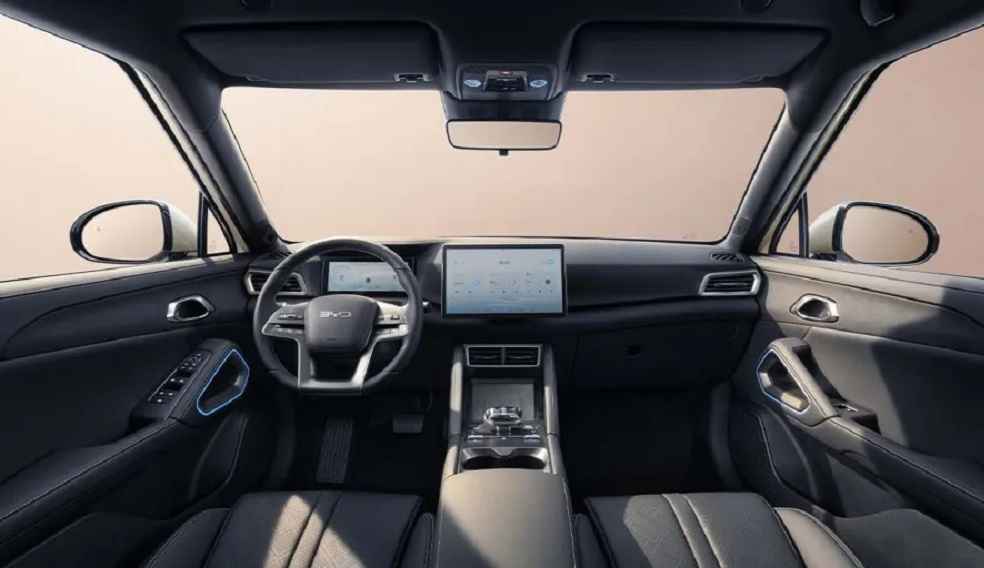
The Atto 1 and the base Atto 2 Dynamic come with a 10.1-inch screen, while the higher-spec Atto 2 Premium gets a 12.8-inch display.
Stella Li, BYD’s global executive vice president, confirmed to Autocar that the phase-out will extend to other models. She said the rotating display limits app performance and has seen limited use in real-world driving.
“If they want to give the best experience, then a rotating screen will limit their apps’ smoothness,” she said. “People love the rotating screens, but the usage is very small.”
With connected vehicles providing manufacturers with detailed data on how features are used, BYD, like Tesla and others, is increasingly relying on live feedback to adjust its product strategy and streamline production. Phasing out underused features can also help reduce manufacturing costs.

Li added that BYD is focused on improving app integration and making its system more universal, although some third-party providers, including Google, have been slower to adapt to automotive requirements.
BYD’s infotainment platform already supports limited app downloads in selected markets. The system is Android-based, but full access to the Google Play Store remains restricted in Australia.
While popular apps such as Spotify are natively supported, some owners who want additional navigation or media apps have turned to sideloading as a workaround.
Although not confirmed, BYD may expand its catalogue of approved in-vehicle apps, following the approach used by Tesla, Volvo, and other brands that allow vetted third-party software aligned with vehicle safety and interface standards.
OBSERVATION | AI-Guided Car Shoppers Are Reshaping Dealership Expectations